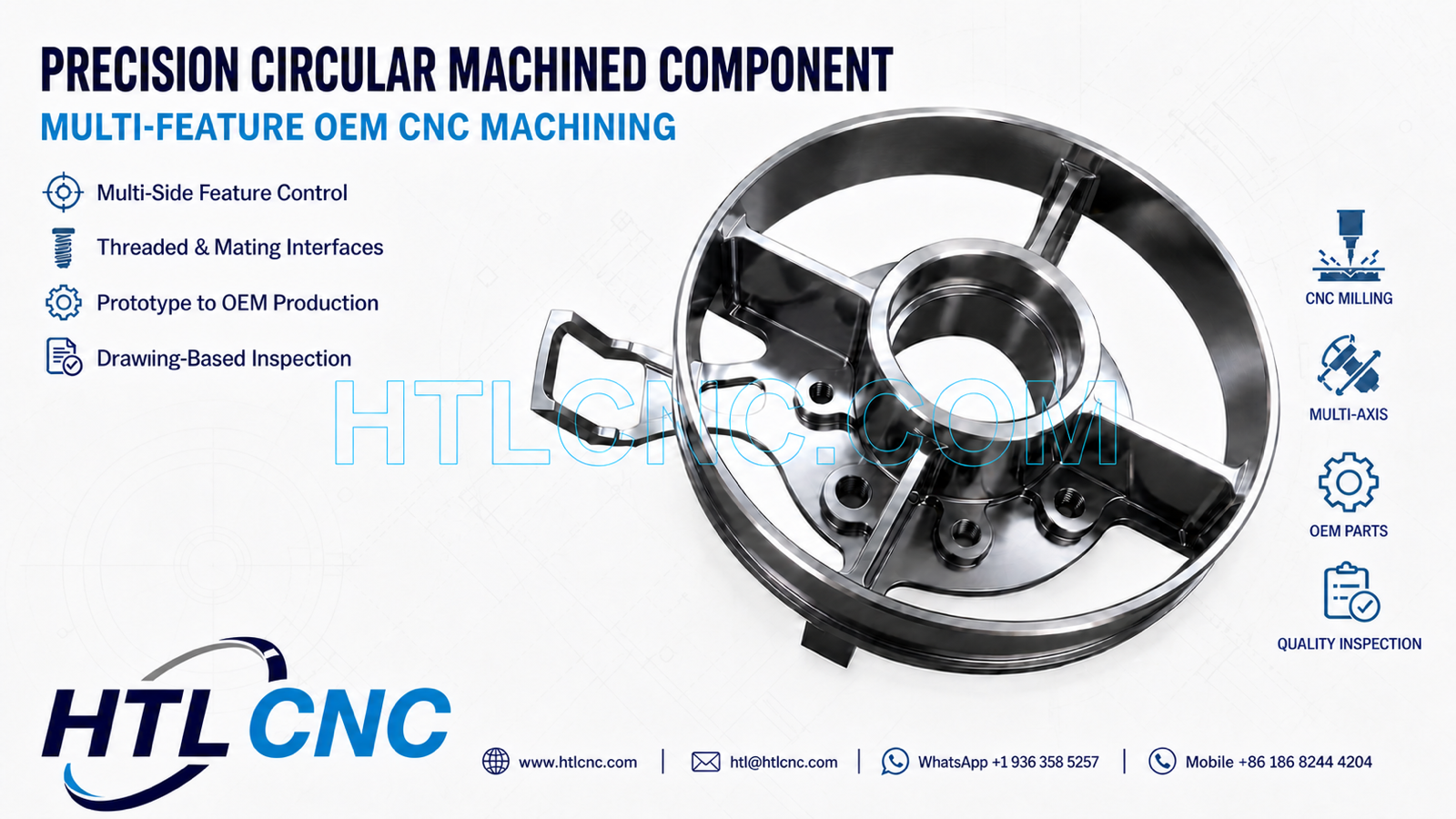
OEM CNC machining for circular structural components with bores, threaded interfaces, ribs, pockets and multi-side features from prototype through repeat production.
Circular structural components can combine rotational geometry with features that behave more like a complex milled part. The component shown here includes a central bore, an outer circular wall, reinforcing ribs, threaded mounting points, open sections, tabs and functional surfaces on opposite sides. Keeping these features aligned requires a process plan based on the drawing and datum structure rather than the overall shape alone.
HTL CNC manufactures custom circular components and multi-feature structural parts from customer drawings, STEP files and approved samples. We support prototypes, low-volume validation and repeat OEM production. Material, tolerances, finish and end use are always defined by the customer's engineering documents; no visual assumption replaces the approved specification.
Machining Circular Geometry and Multi-Side Features
The central bore and outer circular surfaces can establish important concentric or assembly relationships, while ribs, pockets, threaded holes and tabs may require milling access from several directions. Depending on the drawing, the manufacturing route can combine CNC turning, 3-axis milling, 4-axis indexing, 5-axis machining or separate controlled setups. The appropriate route is selected from feature access, datum relationships, tolerance requirements, quantity and fixture stability.
Multi-axis machining can reduce reclamping when holes, pockets and profiles are distributed around the component. However, process choice should remain practical: a complex appearance does not automatically require a specific machine configuration. Tool reach, cutting forces, burr access and inspection strategy must be reviewed together.
Ribs, Open Sections and Structural Stability
Ribs and open sections reduce mass while maintaining selected load paths, but they can also create uneven stiffness during material removal. A controlled roughing and finishing sequence helps manage vibration and distortion. Fixtures must support the part without marking critical surfaces or forcing thin sections away from their free-state geometry.
Edges around openings, intersecting features and tabs require careful deburring. If the component includes cosmetic faces or assembly-contact surfaces, those areas should be identified on the drawing so machining, handling and finishing can be planned before production begins.
Threaded Holes, Bores and Mating Interfaces
Threaded holes and the central bore often influence assembly more directly than general exterior surfaces. Inspection planning can include bore size, hole position, thread verification, face relationships, runout or concentricity when specified, pocket depth and the location of mounting interfaces relative to the selected datums. Measurement methods may include calipers, micrometers, gauges, height measurement and CMM inspection according to the drawing and agreed quality plan.
Surface Treatment and Inspection Planning
The part can be supplied with an as-machined surface or an approved finishing process appropriate to the specified material. Options may include blasting, anodizing, plating, passivation, polishing, painting or other customer-defined treatments. Coating allowances, masked zones, thread protection and cosmetic requirements should be confirmed during quotation because finishing can affect dimensions and appearance.
From Prototype Review to OEM Production
Prototype machining allows engineers to check fit, feature access, assembly relationships and inspection methods before larger quantities are released. After approval, controlled programs, repeatable fixtures, revision management and defined inspection points support stable OEM production.
For an engineering review and RFQ, send your 2D drawing, STEP file, specified material, quantity, critical tolerances, inspection needs and surface-finish requirements.
Website: www.htlcnc.com Email: htl@htlcnc.com WhatsApp: +1 936 358 5257 Mobile: +86 186 8244 4204
Have a part ready for engineering review?
Send your drawing, STEP file, material and quantity directly to HTL CNC for a manufacturing quotation.