Machine angled and multi-face features with fewer datum transfers
htl@htlcnc.comWhatsApp +1 936 358 5257Shenzhen, China · Worldwide OEM support
 Request a quote →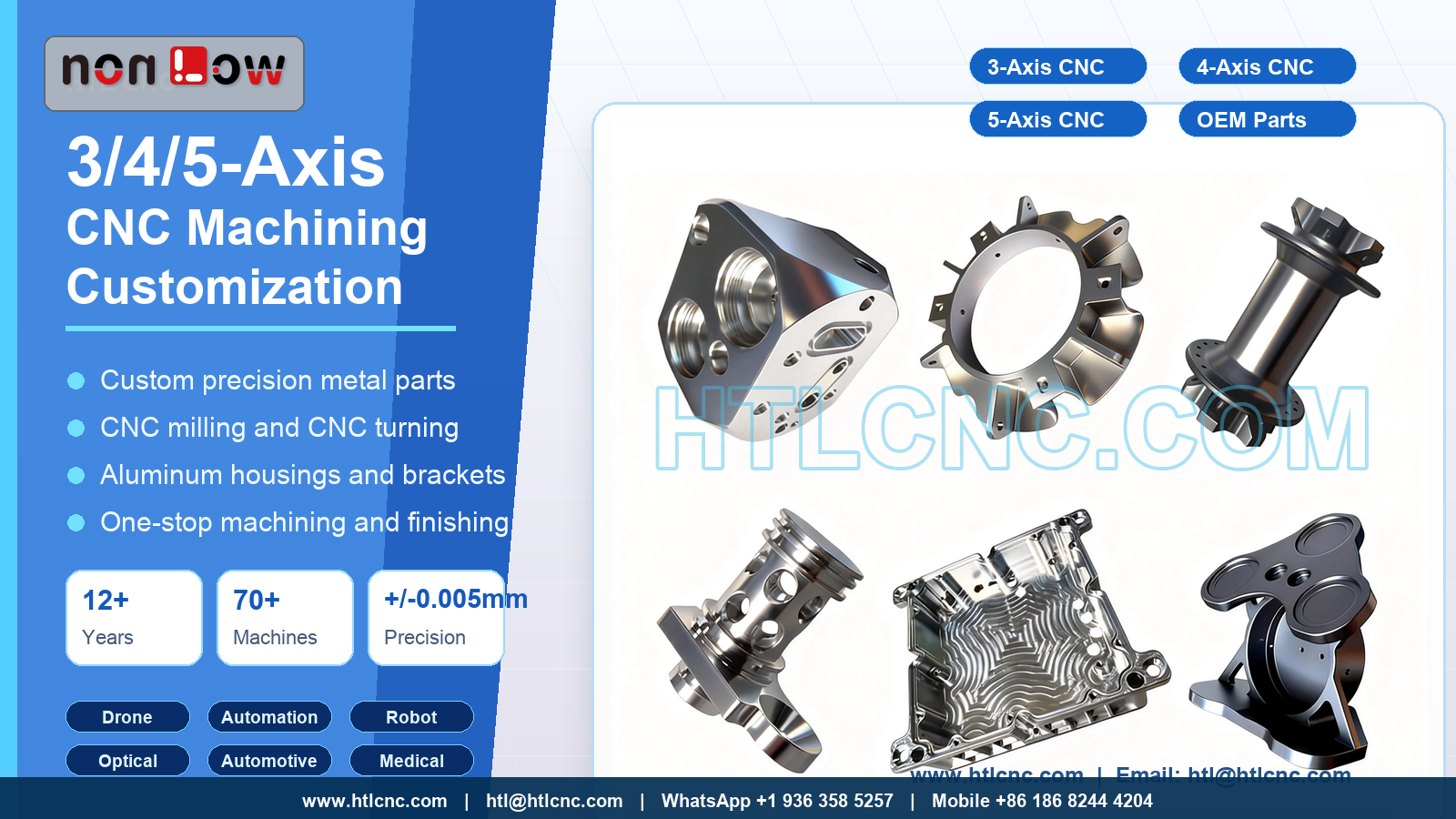
Multi-face precision machining
5-Axis CNC Machining for Complex OEM Parts
Reduce repeated setups and improve access to angled, contoured and multi-face features with a process selected from the actual drawing requirements.
15 yearsmanufacturing experience
85+machining & inspection systems
3/4/5-axismilling, turning & turn-mill
WorldwideB2B engineering support
Built around the buyer's requirements
From a complete RFQ to a controlled supply process.
Improve tool access to complex pockets, contours and mounting interfaces
Validate difficult geometry through prototype and first-article inspection
Establish a repeatable route for low-volume and recurring OEM orders
01
When 5-axis machining adds value
Five-axis machining is useful when critical features are distributed across several faces, positioned at compound angles or difficult to reach with conventional setups. Completing more related operations in one controlled orientation can reduce handling and datum-transfer risk.
Five-axis equipment is not automatically the best choice for every part. HTL CNC compares 3-axis, indexed 4-axis, simultaneous or positional 5-axis, turning and secondary operations against feature access, rigidity, tolerance and quantity before recommending a route.
- Angled bores, faces and mounting interfaces
- Complex pockets and multi-level geometry
- Contoured surfaces and restricted tool access
- Parts that benefit from fewer repeated setups
02
Process planning for complex geometry
The machining sequence should establish reliable datums, preserve support during roughing and reserve controlled finishing operations for critical surfaces. Tool length, holder clearance, machine travel, collision risk and chip evacuation are reviewed before cutting begins.
Workholding must provide access without allowing the component to move under cutting forces. Prototype fixtures may be flexible, while repeat production may use controlled soft jaws, fixture plates or dedicated supports linked to approved setup instructions.
03
Inspection based on functional relationships
Inspection focuses on the dimensions and relationships defined by the drawing: feature position, bore and hole geometry, profile, mating faces and functional datums. CMM inspection, gauges and conventional measurement may be combined according to the agreed quality plan.
Customers should identify first-article reporting, selected dimensional results, revision control and any material or finishing documentation during quotation. This keeps the inspection scope aligned with supplier approval requirements.
Prototype to production
A practical B2B manufacturing path
Every stage remains connected to the customer's approved drawing, revision and purchasing requirements.
- 01
Geometry review
Identify angled features, access limits, datums and tolerance relationships.
- 02
Setup strategy
Select 3/4/5-axis operations, tools and workholding for stable access.
- 03
Machining validation
Confirm toolpaths, feature relationships and edge condition on samples.
- 04
Production control
Maintain approved programs, setup references and inspection routines.
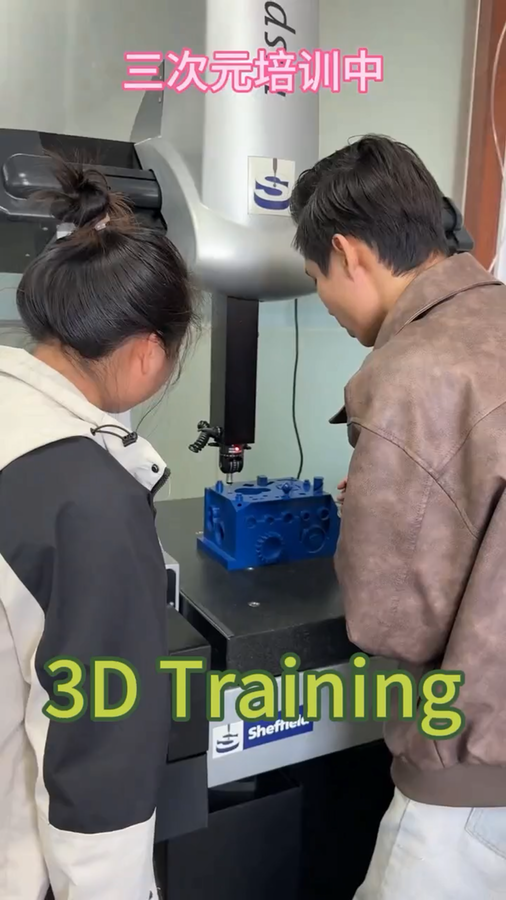
Inspection scope defined before production
Quality evidence for supplier approval
Measurement methods and documentation are selected from the released drawing and agreed purchase-order requirements.
- Datum-to-feature positional relationships
- Angled bores, faces and compound geometry
- Profile and mating-surface requirements
- Thread, edge and deburring condition
- First-article and repeat-batch consistency
Engineering and procurement FAQ
Answers before you request a quote
Does every complex part require 5-axis CNC machining?
No. Indexed 4-axis, 3-axis plus secondary setups or turn-mill machining may be more practical. The route should follow geometry, tolerance and quantity.
What information is needed for a 5-axis quotation?
Provide the 3D model, 2D drawing, material, quantities, critical tolerances, finish, inspection scope and delivery requirements.
Can five-axis parts move from prototype to repeat orders?
Yes. Prototype validation is used to confirm machining access, workholding and inspection before controlled programs and fixtures support repeat production.
Start with complete project data
Send your drawings for engineering review.
Include STEP files, 2D drawings, material, quantities, tolerances, finish, inspection and delivery requirements.